L&D - Corporate Learning

Year

2023

Client

B2B  •  Corporate Learning

Role

UX/UI  •  Branding  •  User Research

Tools

Figma  •  Webflow  •  ChatGPT 

Year

2023

Client

B2B  •  Corporate Learning

Role

UX/UI  •  Branding  •  User Research

Tools

Figma  •  Webflow  •  ChatGPT

An AI-based learning intelligence platform that automates curation, generation and delivery of content, enabling organizations provide tailored learning experiences, embedded within the daily communication tools (Slack, Teams, WhatsApp).

About the Project:
The L&D controller project was conceived and developed within a relatively short timeframe of a few months. This MVP served multiple purposes: functioning as a sales tool, facilitating user research, and supporting fundraising endeavors. Key components that were eventually developed included the "brain" responsible for AI recommendations and learning path capabilities, as well as the chatbot interface for learners.

The Tailor-ED for L&Ds was the final pivot of the company, aiming to solve learning in the workplace for adult learners. We researched this field for a few months, from the sales, users and market prospectives. Coming up with a product that would eventually be used as a primary tool for a L&Ds representative or department. While large parts of the product where defined and designed, the development was cut short due to the end of the runway.
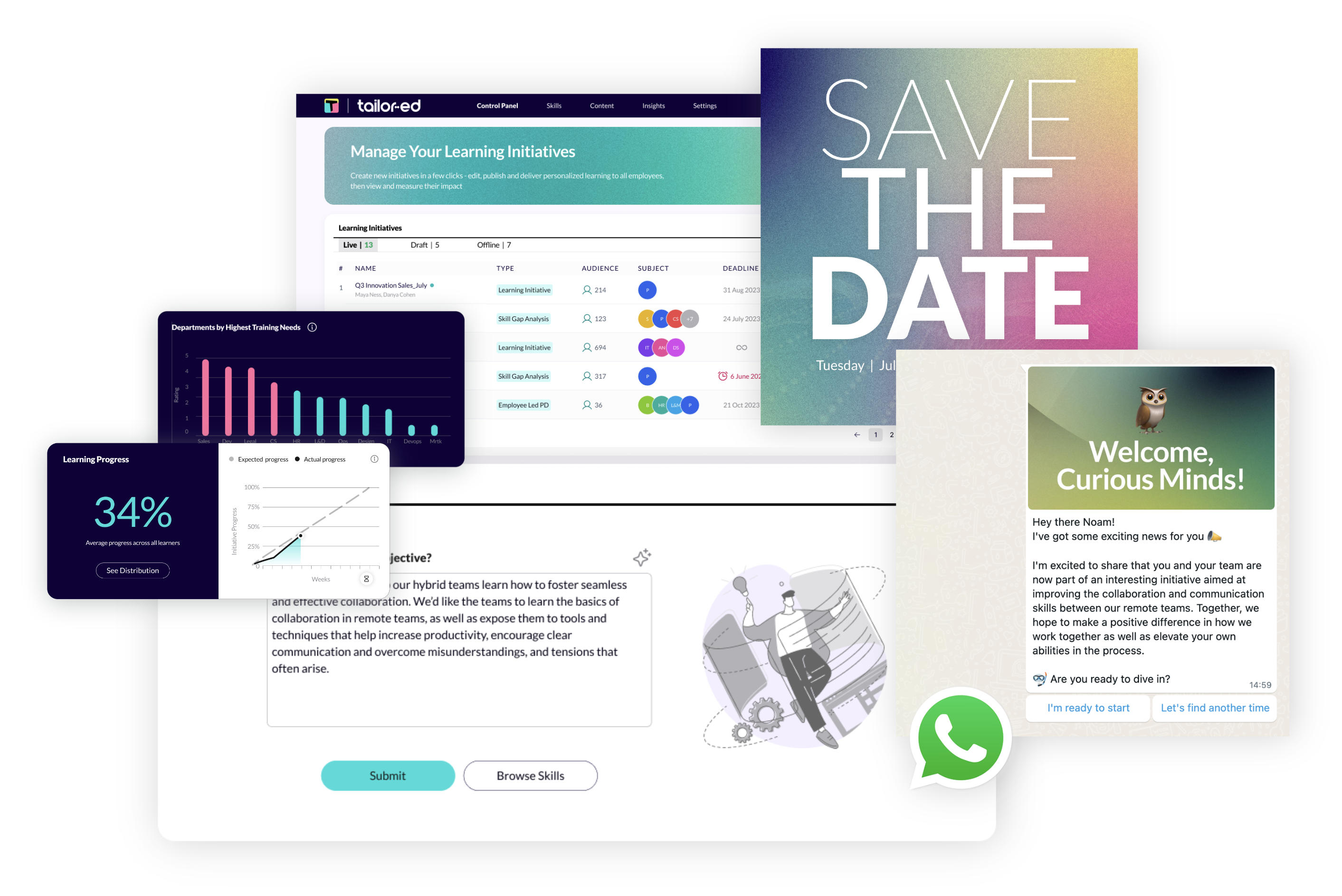
An AI-based learning intelligence platform that automates curation, generation and delivery of content, enabling organizations provide tailored learning experiences, embedded within the daily communication tools (Slack, Teams, WhatsApp).

Year

2023

Client

B2B  •  Corporate Learning

Role

UX/UI  •  Branding  •  User Research

Tools

Figma  •  Webflow  •  ChatGPT  •  Slack

2023  |  UX/UI Design  | User Research  |  Brand Identity

L&D 
Corporate Learning

An AI-based learning intelligence platform that automates curation, generation and delivery of content, enabling organizations provide tailored learning experiences, embedded within the daily communication tools (Slack, Teams, WhatsApp).

K12 image cluster

The Problem

By 2025, 40% of the skills for the same occupation are estimated to change

Despite that, organizations are unable to effectively bridge their talent skills gap, due to limited L&D resources and lack of engagement from employees and their managers. According to 'The World Economic Forum' his is a critical issue, as those who will not close that gap, are likely to decrease their performance by 12%-18% annually.

The Market

The new trends: Personalized learning paths, automatically curated content, and integrated delivery in productivity tools.

Current corporate tech tools like LMSs and LXPs are no longer adequate solutions for bridging the gap in corporate learning.

$1.8T

Cost of productivity loss
(each year)

75%

Dealing with a skill shortage(of corporates with 250+ workers reported)

9%

See improvement
(in organizational growth transformation, profit and productivity)

$93B

Corporate learning spendon learning management systems, content etc.

The Audience

Learning at work happens everywhere, from casual chats to formal training, fostering ongoing employee growth

End-User Persona:

  • Learning and development managers

  • Frontline to top-level management

  • Employees (learners)

Buyer Persona:

  • Business Enablement Units. 500+ employee company

  • Business unit leads / hiring managers, L&D and HR

  • L&D Team of one - smaller companies

  • CEO - enablement in each business unit

The Research

L&Ds main challenge is
employee engagement and manager buy-in. They struggle prioritizing learning over daily tasks.

Input from learning & development leaders:

  • Creating and maintaining quality, tailored and up-to-date content takes a lot of time and therefore is not scalable.

  • Online academies (LinkedIn Learning, Udemy, Pluralsight etc.) have low usage rates and therefore hard to justify their costs.

  • Most LMS platforms lack crucial features needed to adequately manage, distribute and measure the learning of the employees.

  • Wary of introducing a new platform due to the abundance of existing apps and technologies in use on a daily basis, with many others remaining untouched.

  • At the end of the day, L&Ds must prove their ROI on learning and aim to reduce employees "time to productivity". There current tool kit neither provide scalable solutions to create effective learning experiences, nor succeed in reflecting their impact over time.

Input from Employees:

  • Time Constraints: Employees often struggle with allocate dedicated time for learning in a work setting due to tight schedules and demanding workloads.

  • Lack of Resources: Limited access to relevant resources, both in terms of materials and mentorship. Due to cost constrains, at time lack of SME and professionals available.

The Solution

Tailor-ED employee training management platform that creates personalized conversational learning experiences.

The AI-based product is able to deliver, scale and measure productive learning on existing communication tools (Teams, Slack, WhatsApp ect.)


The Market

The new trends: Personalized learning paths, automatically curated content, and integrated delivery in productivity tools.

Despite that, organizations are unable to effectively bridge their talent skills gap, due to limited L&D resources and lack of engagement from employees and their managers. According to 'The World Economic Forum' his is a critical issue, as those who will not close that gap, are likely to decrease their performance by 12%-18% annually.

Hero - Elements Webflow Library - BRIX Templates
The Problem

By 2025, 40% of the skills for the same occupation are estimated to change. Despite that, organizations are unable to effectively bridge their talent skills gap, due to limited L&D resources and lack of engagement from employees and their managers. This is a critical issue, as those who will not close that gap, are likely to decrease their performance by 12%-18% annually.


Problem

By 2025, 40% of the skills for the same occupation are estimated to change.

Despite that, organizations are unable to effectively bridge their talent skills gap, due to limited L&D resources and lack of engagement from employees and their managers. According to 'The World Economic Forum' his is a critical issue, as those who will not close that gap, are likely to decrease their performance by 12%-18% annually.


Market

Current corporate tech tools like LMSs and LXPs are no longer adequate solutions for bridging the gap in corporate learning

The new trends: Personalized learning paths, automatically curated content, and integrated delivery in productivity tools.

$1.8T
Cost of productivity loss
(each year)
75%
Dealing with a skill shortage
(of corporates with 250+ workers reported)
9%
See improvement
(in organizational growth transformation, profit and productivity)
$93B
Corporate learning spend

on learning management systems, content etc.
Users

Learning at work happens everywhere, from casual chats to formal training, fostering ongoing employee growth

Buyer Persona:

  • Business Enablement Units. 500+ employee company (not just hi-tech)
  • Business unit leads / hiring managers, L&D and HR
  • L&D Team of one (responsible for enablement) - smaller companies
  • CEO - enablement in each business unit

End-User Persona:

  • Learning and development managers
  • Manager
  • Employee - learner
Research

L&Ds main challenge is employee engagement and manager buy-in. They struggle prioritizing learning over daily tasks.

Input from learning & development leaders:

  • Creating and maintaining quality, tailored and up-to-date content takes a lot of time and therefore is not scalable.
  • Online academies (LinkedIn Learning, Udemy, Pluralsight etc.) have low usage rates and therefore hard to justify their costs.
  • Most LMS platforms lack crucial features needed to adequately manage, distribute and measure the learning of the employees.
  • Weary of introducing a new platform as there normally already is an abundance of apps and technologies already used on a day-to-day basis, and many more that aren't touched at all.
  • At the end of the day, L&Ds must prove their ROI on learning and aim to reduce employees "time to productivity". There current tool kit neither provide scalable solutions to create effective learning experiences, nor succeed in reflecting their impact over time.

Input from Employees:

  • Time Constraints: Employees often struggle with learning in a work setting due to tight schedules and demanding workloads, a challenge to allocate dedicated time for learning.
  • Lack of Resources: Limited access to relevant learning resources, both in terms of materials and mentorship. Due to cost constrains, at time lack of SME and professionals available.  
Solution

Tailor-ED employee training management platform that creates personalized conversational learning experiences. The AI-based product is able to deliver, scale and measure productive learning on existing communication tools (Teams, Slack, WhatsApp ect.)


The Market

LMSs and LXPs and other corp techno longer solve the gap of corporate learning. The new trends: Personalized learning paths, automatically curated content, and integrated delivery in productivity tools.

$1.8T
Cost of productivity loss
(each year)
75%
Dealing with a skill shortage
(of corporates with 250+ workers reported)
9%
See improvement
(in organizational growth transformation, profit and productivity)
$93B
Corporate learning spend

on learning management systems, content etc.

The Users

Buyer Persona:

  • Business Enablement Units. 500+ employee company (not just hi-tech)
  • Business unit leads / hiring managers, L&D and HR
  • L&D Team of one (responsible for enablement) - smaller companies
  • CEO - enablement in each business unit

End-User Persona:

  • Learning and development managers
  • Manager
  • Employee - learner

Research

Input from learning & development leaders:

  • Their main challenge is employee engagement and manager buy-in. They struggle prioritizing learning over daily tasks.
  • Creating and maintaining quality, tailored and up-to-date content takes a lot of time and therefore is not scalable.
  • Online academies (LinkedIn Learning, Udemy, Pluralsight etc.) have low usage rates and therefore hard to justify their costs.
  • Most LMS platforms lack crucial features needed to adequately manage, distribute and measure the learning of the employees.
  • Are weary of introducing a new platform as there normally already is an abundance of apps and technologies already used on a day-to-day basis, and many more that aren't touched at all.
  • At the end of the day, L&Ds must prove their ROI on learning and aim to reduce employees "time to productivity". There current tool kit neither provide scalable solutions to create effective learning experiences, nor succeed in reflecting their impact over time.

Input from Employees:

  • Time Constraints: Employees often struggle with learning in a work setting due to tight schedules and demanding workloads, making it challenging to allocate dedicated time for learning.
  • Lack of Resources: Limited access to relevant learning resources, both in terms of materials and mentorship. At time due to cost constrains, at time lack of SME and professionals available.  
The Solution

Tailor-ED employee training management platform that creates personalized conversational learning experiences. The AI-based product is able to deliver, scale and measure productive learning on existing communication tools (Teams, Slack, WhatsApp ect.)


Product Demo
Product Vision
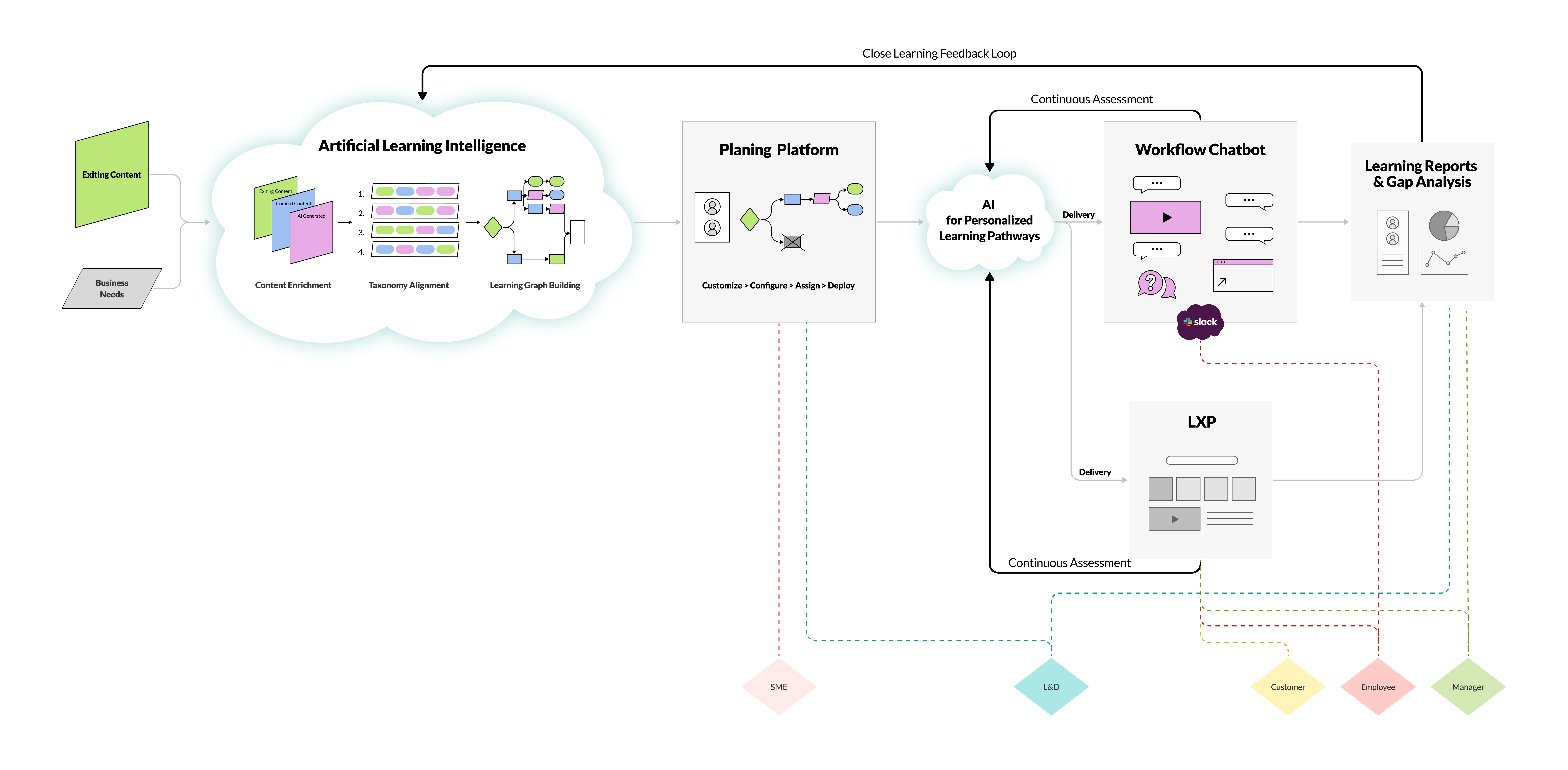
Product vision flow
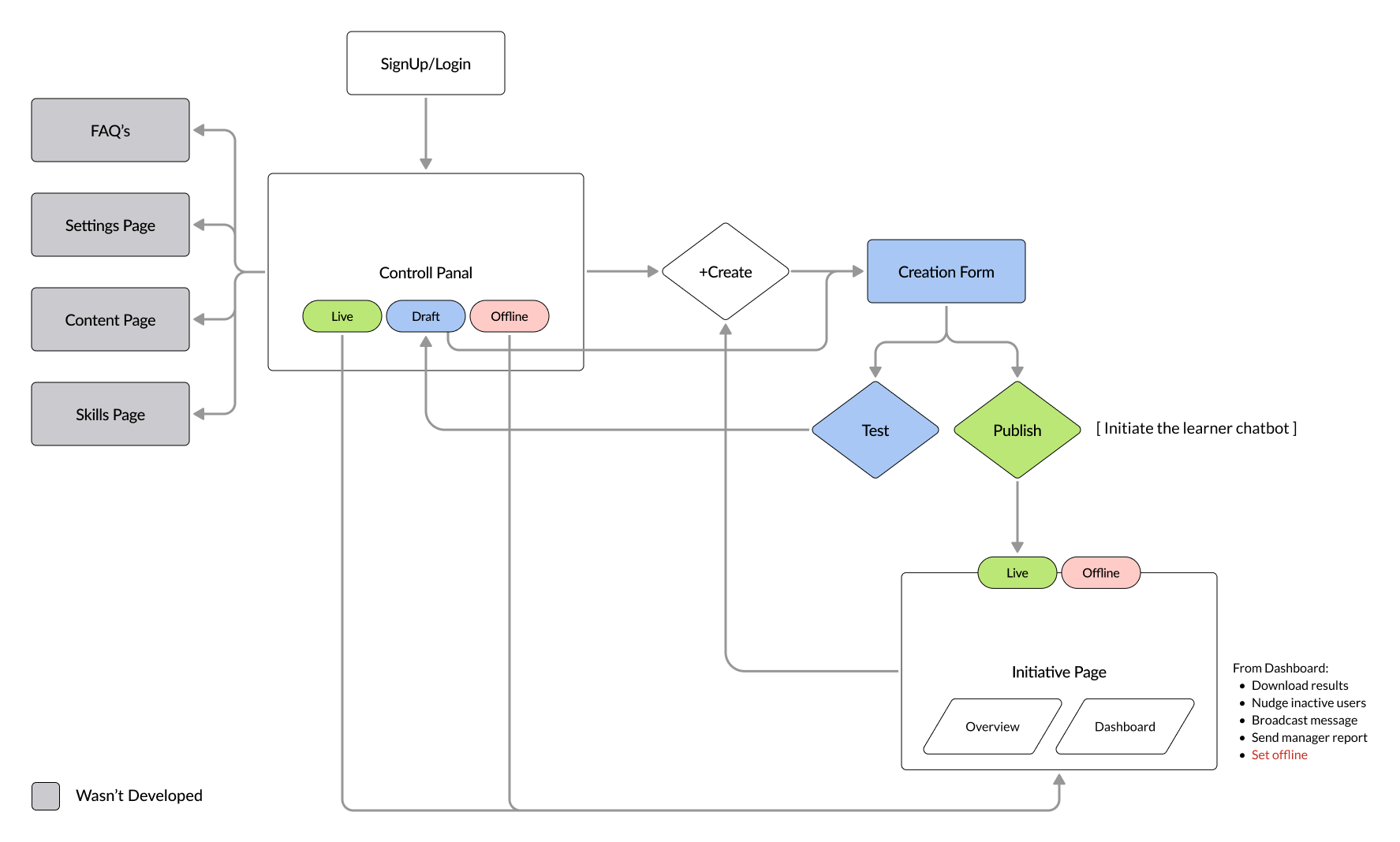
Product Flow
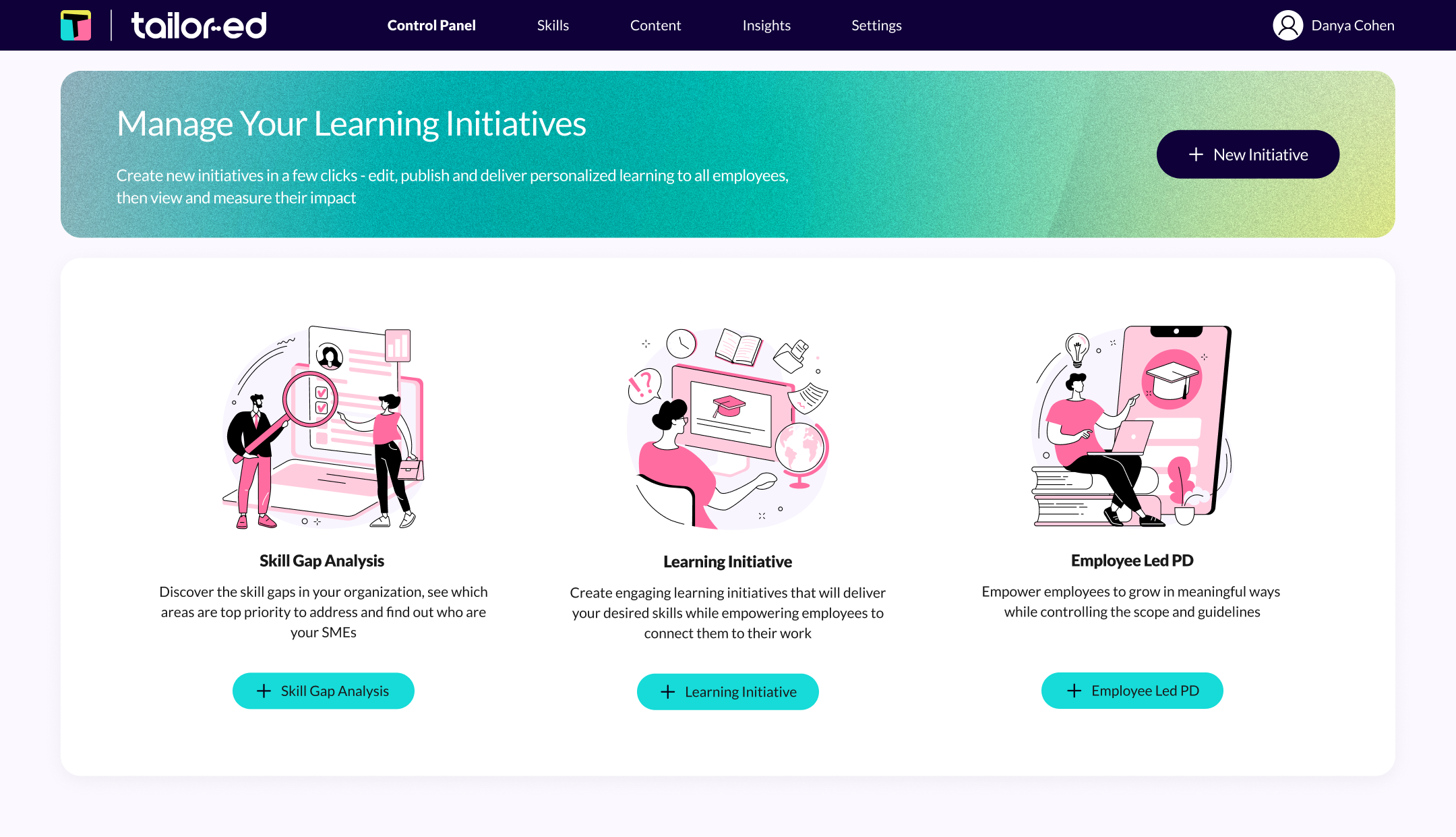
Key Features

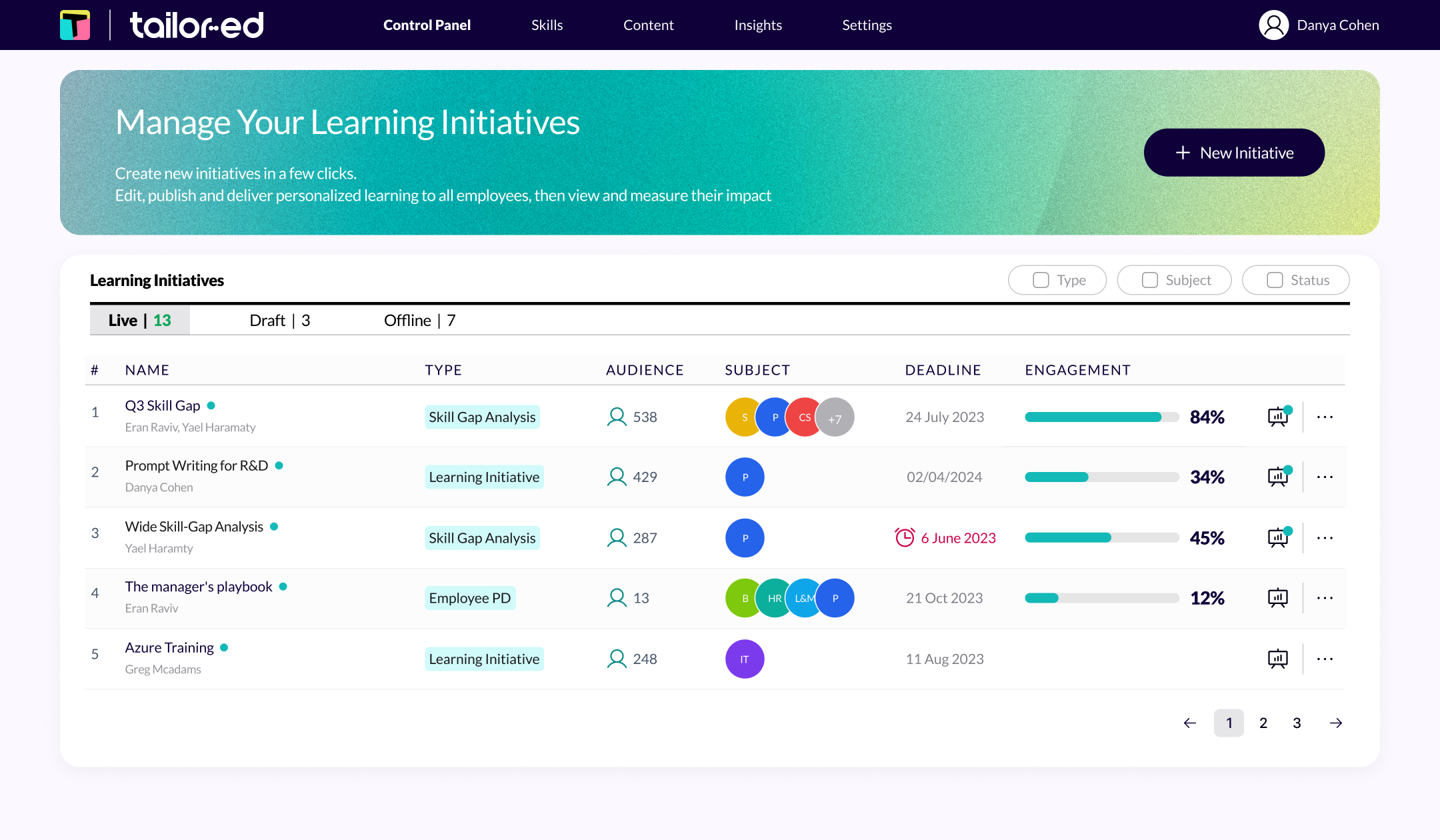
Control Panel

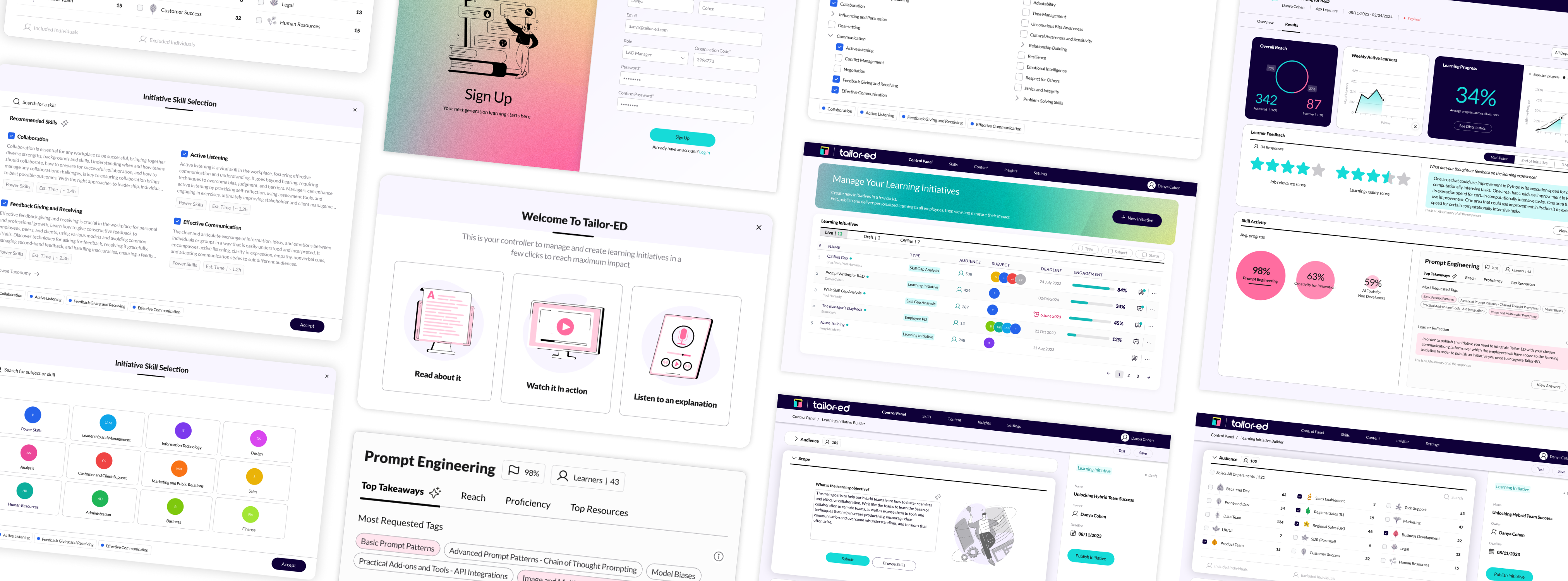
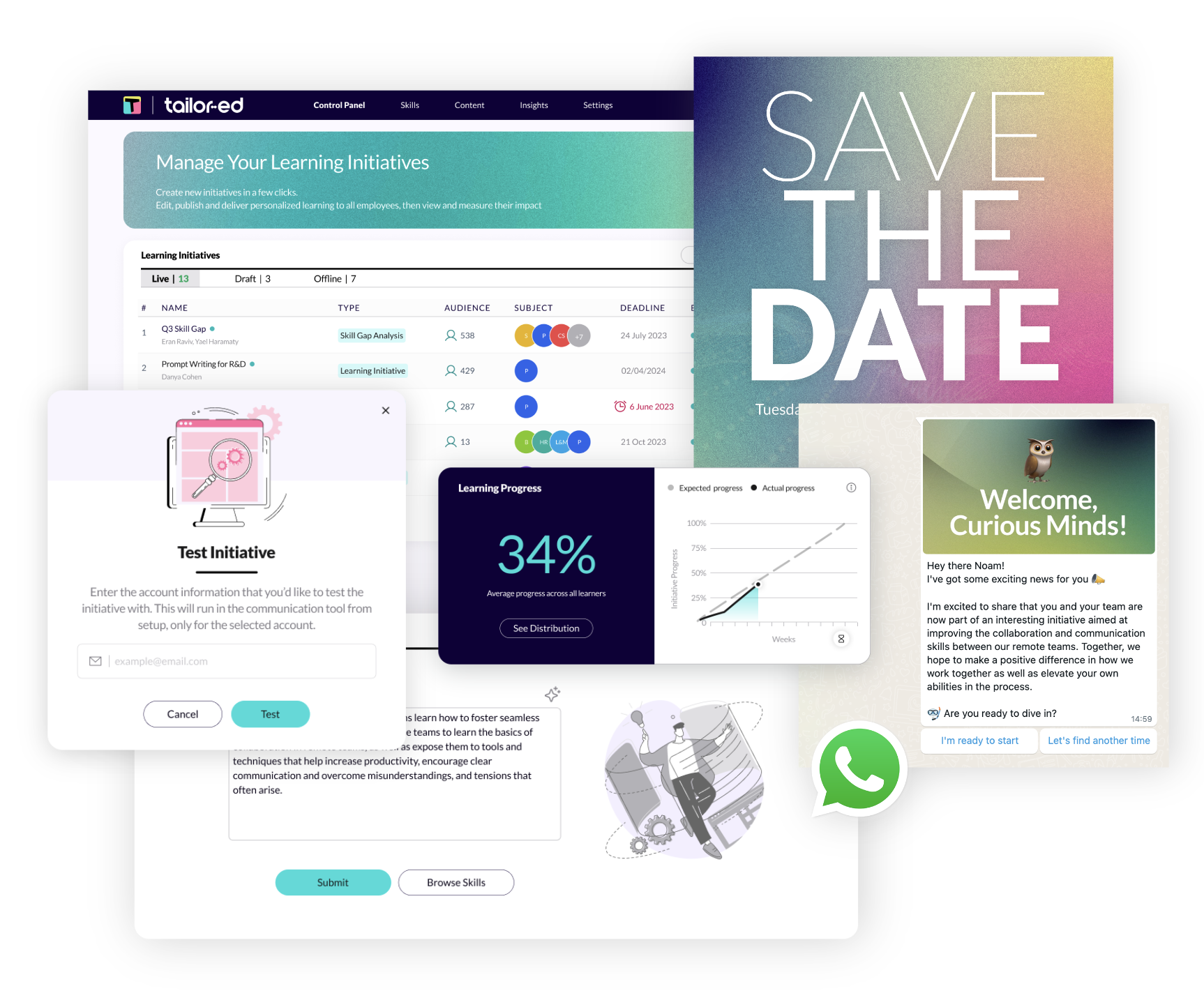
The control panel enables L&Ds setup and control all learning initiatives in the company as well as see how they are performing and decide What they should do next.

control panal image

Learning Initiative Builder

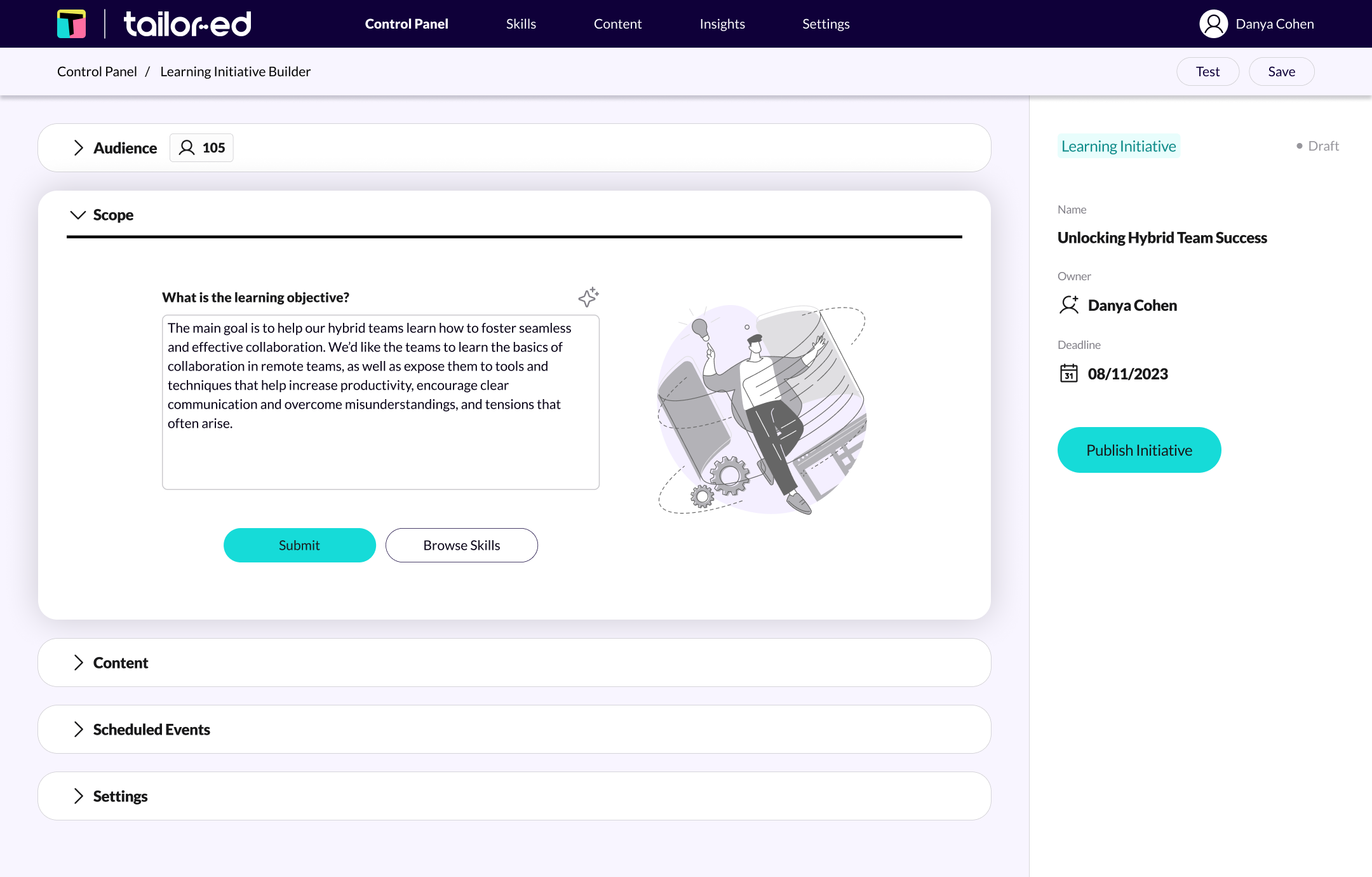
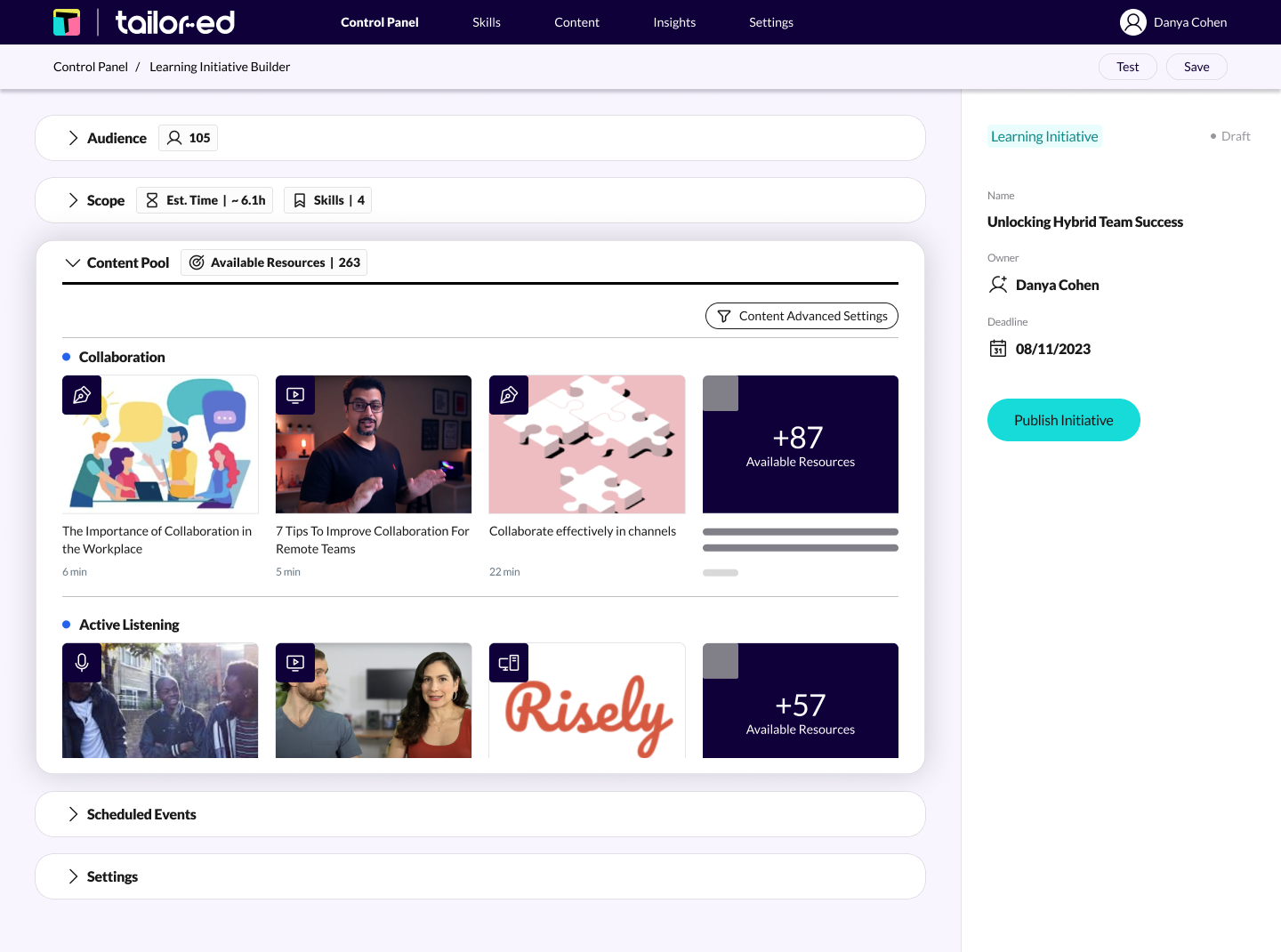
L&Ds can create different types of initiatives for their organizations. Here they can build a pathless course covering the subjects and skills of their choosing. This builder than serves as a catalog for the learner to customize their learning, according to their needs and interests (later see the 'AI Assistant Chatbot').

learning initiative scope image

Creation Flow: Scope section starts with prompting a learning objective that extracts skills and recommends content

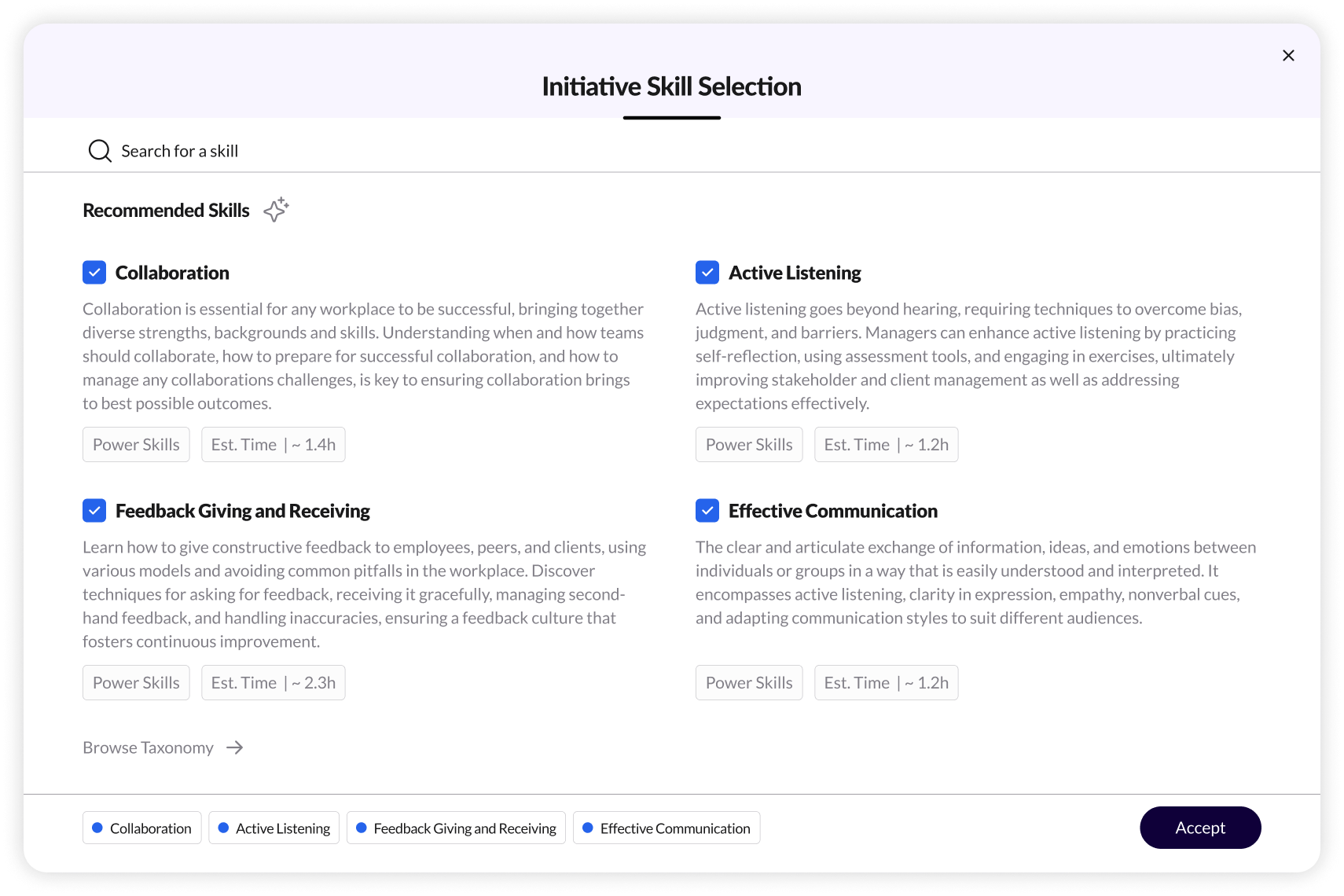
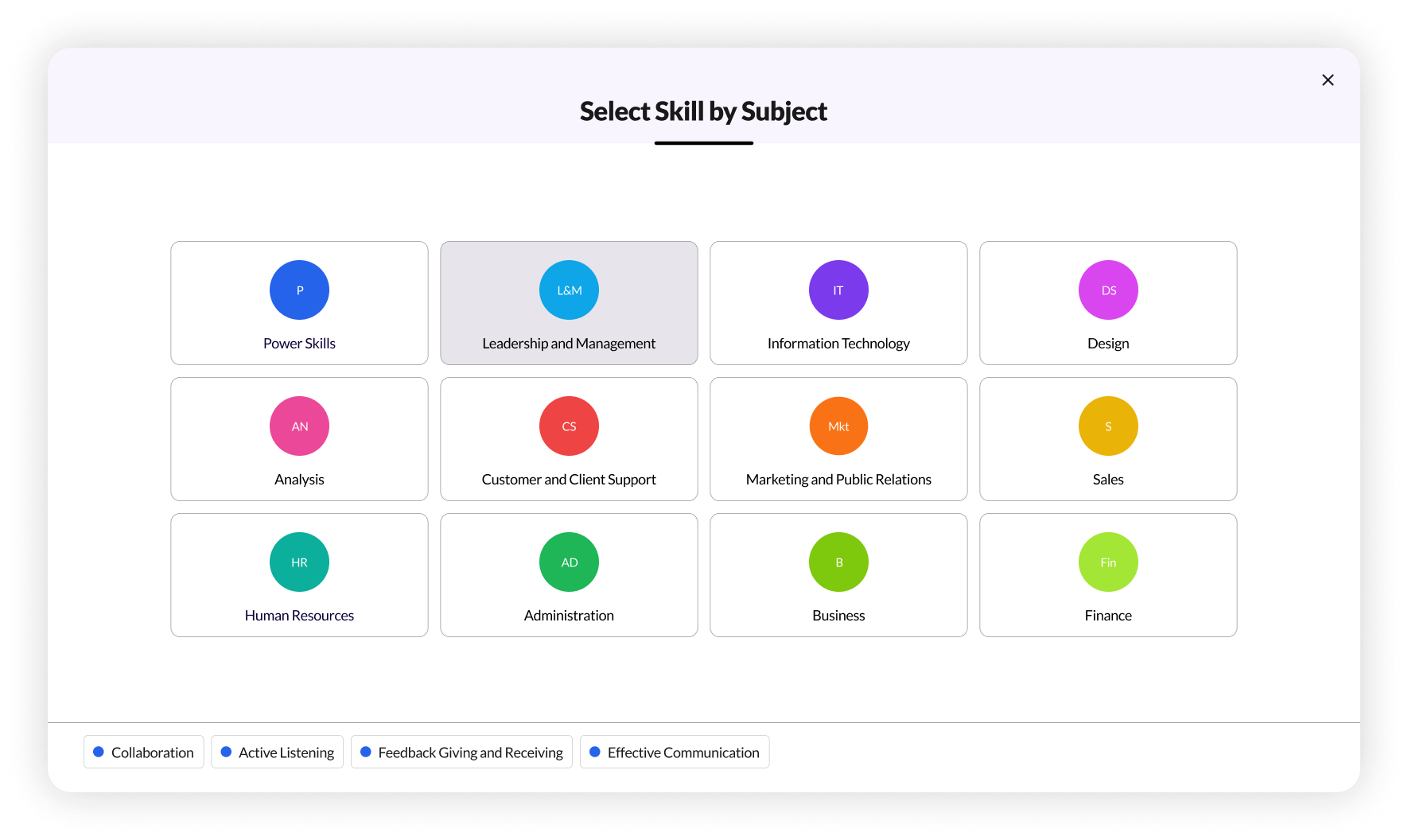
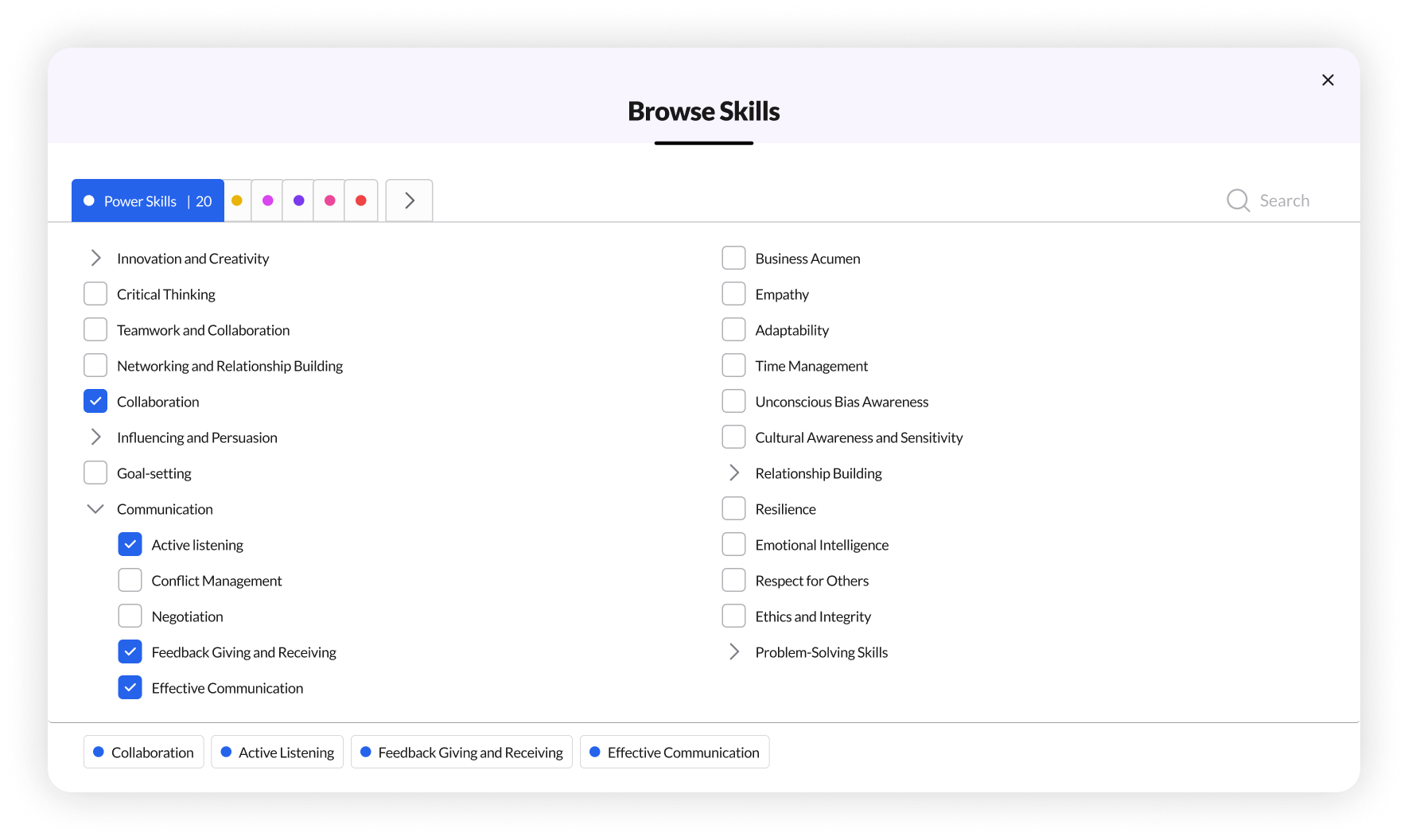
Skills Selection Dialog → with the recommended skills, can be customized according to skills taxonomy and learning needs

Learning initiative content image

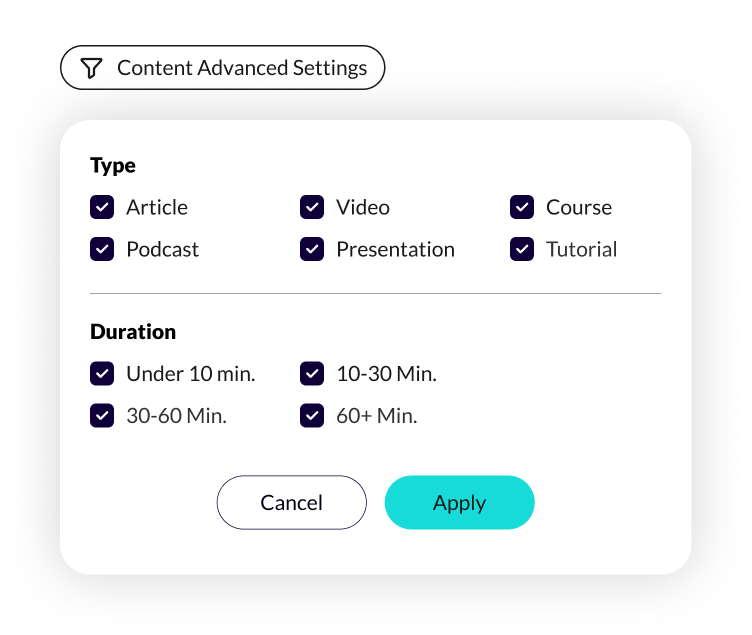
Creation Flow: Content pool section allows a content review and filtering.

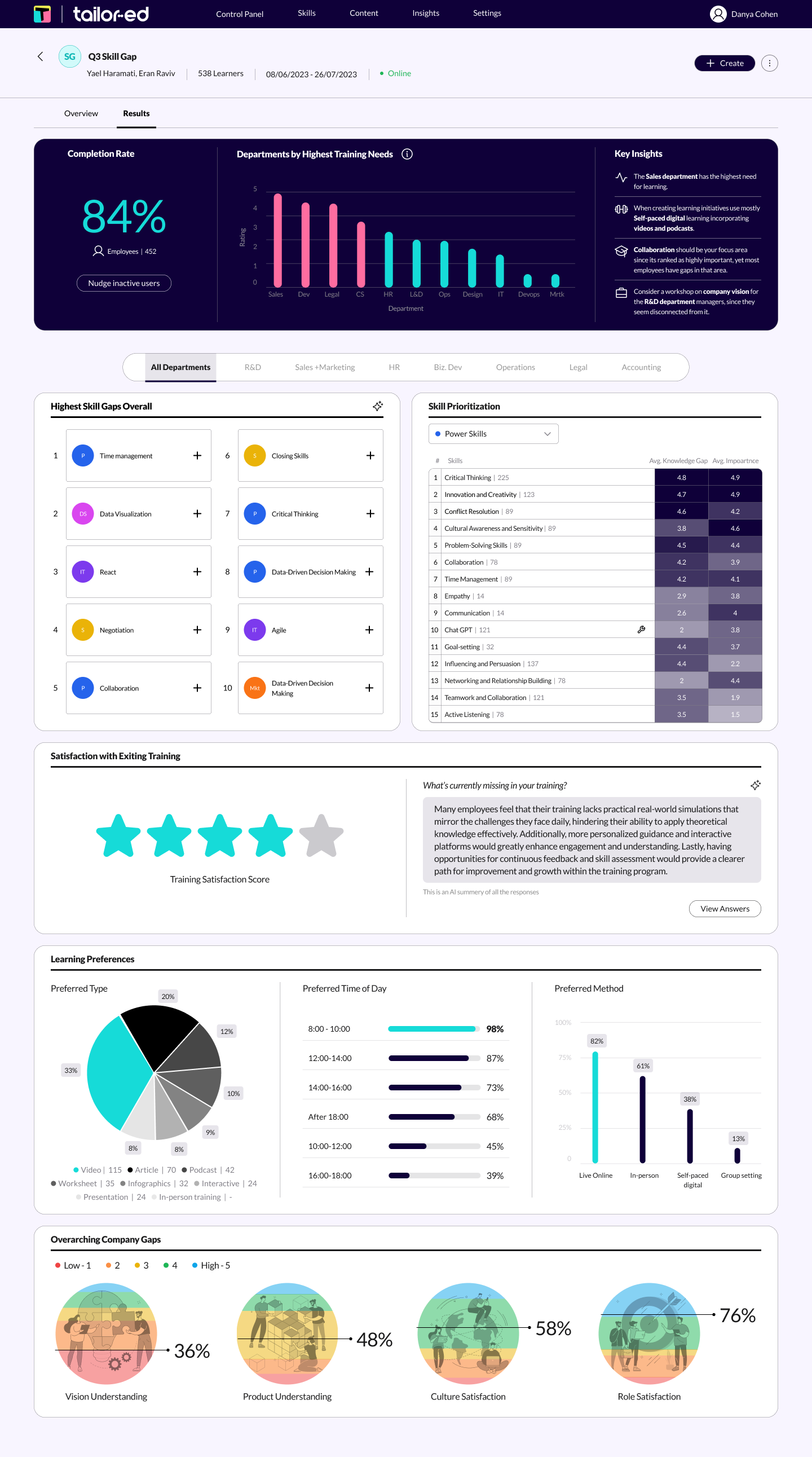
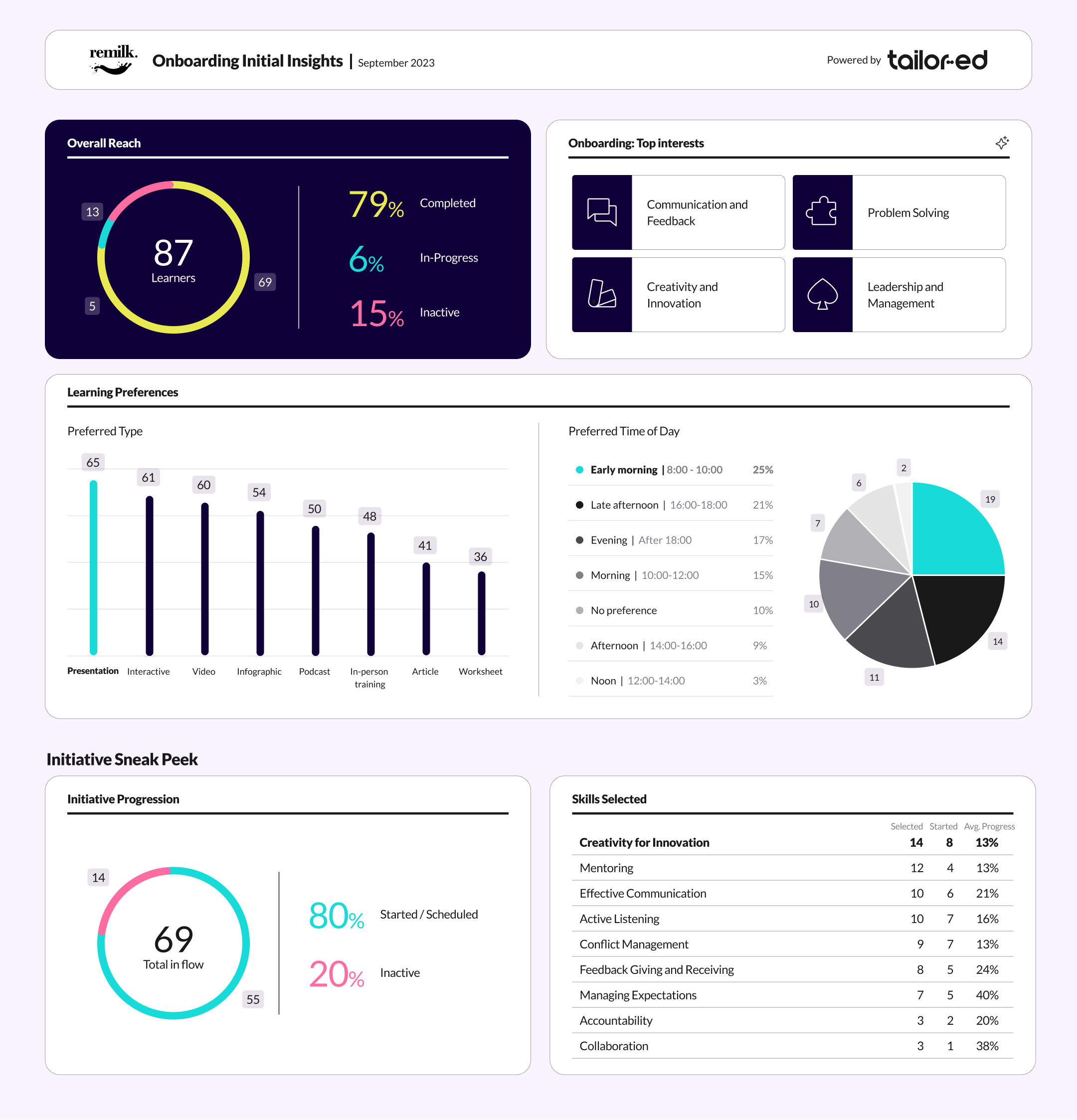
Reports and skill gaps

Managers can track their team’s learning progress. Chatbot can flag and make recommendations that help the manager encourage and improve learning in the team (reminder to schedule learning time, set 1:1 with struggling employees).

L&D has usage/learning reports that they can use to show ROL as well as see where the learning efforts are going, and where the skill gaps are. This can inform their decisions on additional learning initiatives.

L&D dashboard image 1
L&D dashboard image 2

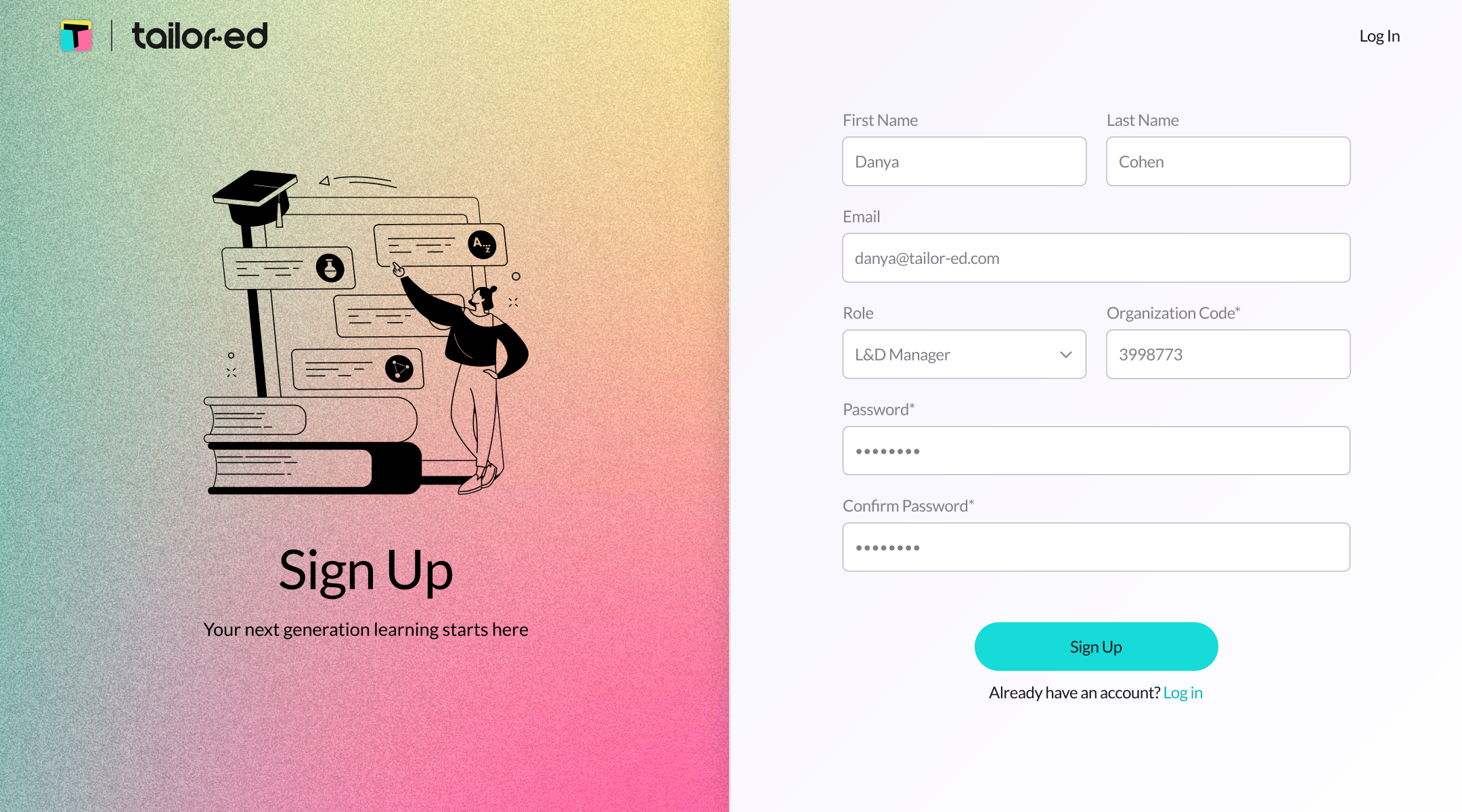
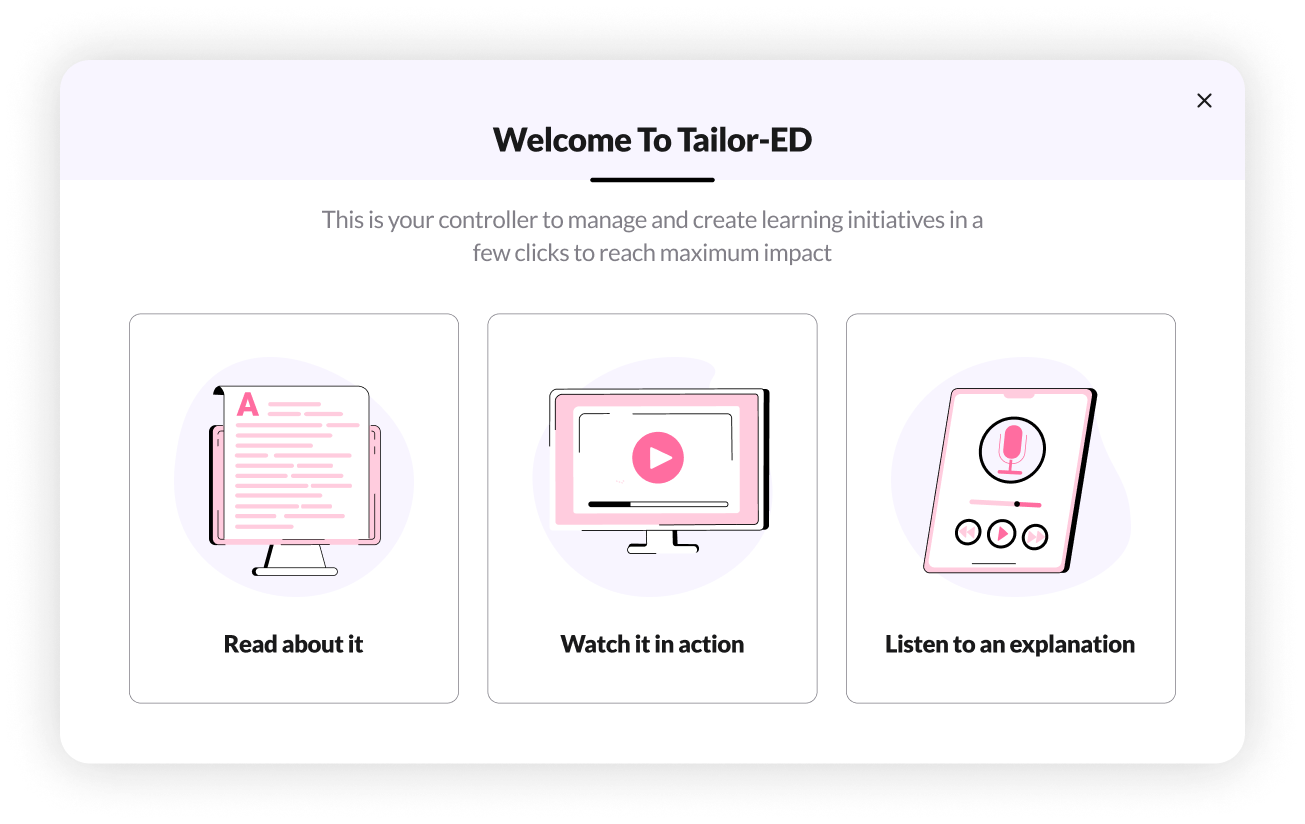
Sign Up and First Time flow

SignUp imageWelcome imageFirst time flow image

AI Assistant Chatbot

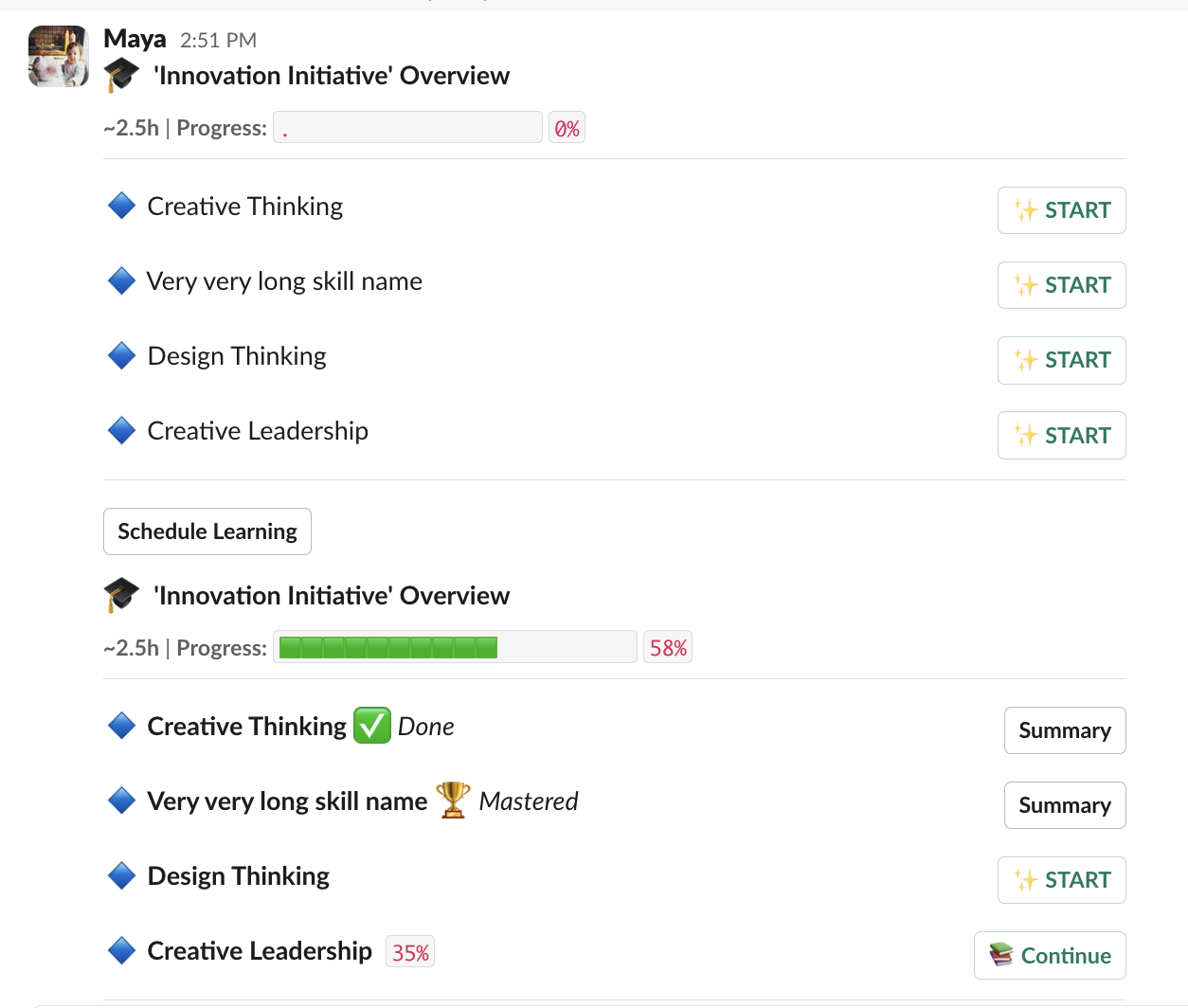
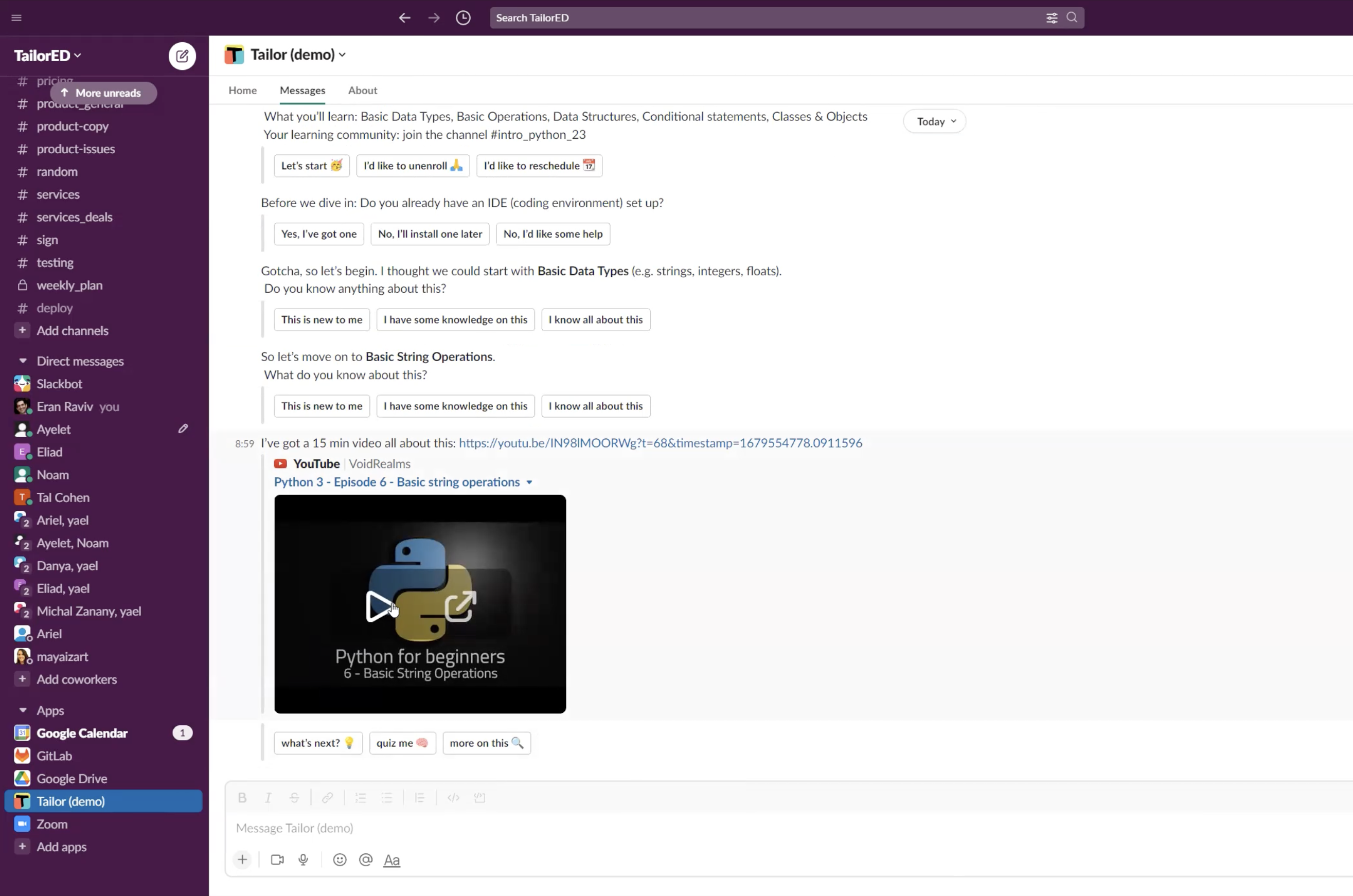
Turn existing learning initiatives into engaging, blended courses delivered within the employee workflow through a Slack / Teams / WhatsApp chatbot experience. Through the learning bot you can preform continuous dialog with the learner to understand their needs, preferences, and skill levels. The system use this information to personalize their learning path.

View chatbot demo
Slack dialog imageSlack demo image

Reflection

In general, I had a great time and privilege to explore  and evolve with this project. We transitioned from Sketch to Figma, creating an entire design system as well as made a new brand revamp.

Initially conceived as a marketing and sales tool, the product definition and design overlooked the eventual scale and breadth of content it would hold. Consequently, certain aspects of the creation process lacked coherence, which I believe could have been broken down into smaller, more manageable pieces.

This lack of refinement became apparent during user testing, particularly in accommodating the diverse workflows of L&D teams, where a crucial flow remained unstreamlined to meet their specific needs.

In general, I had a great time and privilege to explore  and evolve with this project. We transitioned from Sketch to Figma, creating an entire design system as well as made a new brand revamp.

Initially conceived as a marketing and sales tool, the product definition and design overlooked the eventual scale and breadth of content it would hold. Consequently, certain aspects of the creation process lacked coherence, which I believe could have been broken down into smaller, more manageable pieces.

This lack of refinement became apparent during user testing, particularly in accommodating the diverse workflows of L&D teams, where a crucial flow remained unstreamlined to meet their specific needs.

Use Case: Remilk POC
1 Month POC
100 Employees
9 Power Skills
Our partnership with Tailor-ED has been transformative. The AI-driven personalization in learning has not only elevated employee engagement but has also boosted our overall learning culture. It's undoubtedly a game-changer in workforce development.
remilk logo
Tal Selikter
Remilk’s L&D
  • Decreased cost$10 (user/mo) vs. $28 for alternative
  • 36X less creation time
    8 hrs. Vs. 288 hrs. industry average
  • 42X faster to deliver1 day vs. 6 weeks industry average
  • Achieved 100% reach vs. industry average of 51%
  • 85% engagement vs industry average of 20%